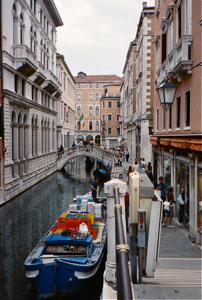
Venice!

Venice!
La Serenissima

Wednesday, November 3, 2010

A “coco taxi” in Cuba


What do you think of when you here the name Cuba??

If you are over 70, you might think of Cuban dance band music, the great casino in Havana and the glamour of 20s and 30s society from the US and Europe, whooping it up in Cuba. My parents were a great example of being totally enraptured with Cuban music and dance – which they were very good at incidentally – and I grew up to the sounds of Cuba and Latin America.


If you’re a baby boomer, you probably think of things like Che Guevara, Fidel Castro (and more recently his brother Raoul), the Cuban Revolution (July 1953), the Cuban missile crisis/Bay of Pigs/President John F Kennedy, US trade embargo on Cuba, Cuban cigars, Cuban rum, Spanish colonial architecture, crumbling but elegant art deco buildings, sugar and palm trees, poverty, huge 1950’s US cars with lots of chrome trim and fins, the song Guajira guantanamera (yo soy un hombre sincero etc), Cuban music, especially exuberant dance music like rumbas and salsas.

Whether a boomer or gen x you might recall that in the early 90’s, Gloria Estefan, who popularised salsa music in the US with her Miami Sound Machine, released her album “Mi Tierra” which celebrated Cuban music and its different styles.

From the late 90’s, you might think of the Buena Vista Social Club, the wonderful assembly of veteran musicians and singers whose cd and concerts we owe to Ry Cooder and the film that documented their journey from obscurity to stardom to Wim Wenders. Great names – Compay Segundo, Ruben Gonzalez, Eliades Ochoa, Ibrahim Ferrer, Omara Portuondo and assorted other gifted people –graced our screens, effortlessly and expertly.

If you’re gen y, you might think of the sparkling waters of the Caribbean and being there, relaxing, surfing … 

It’s not a bad level of impact for a small country – and I’ve only scratched the surface of the “what do you think of” question.

Well, because of my exposure to the music since age 2, I always had a soft spot for Cuba. Julian, being fluent in Spanish and having done some Latin American studies at uni, also had an interest. So, in 2000, we winged our way to Cuba, via Mexico. Because of the US embargo, you still can’t fly from the US direct to Cuba. We decided to spend Christmas there, 10 days in all. We would be based in Havana, but travel around to other nearby towns as the whim took us. Well, that was the plan at least …

We caught a plane from Los Angeles to Cancun Mexico, and then transferred to a smaller aircraft for the flight to Havana. When I say smaller, it was actually a DC9 – remember them? The bandaids and string were not visible (!) but what it lacked in modernity it made up for in air conditioning. To say that the thermostat was set to FREEZING would be an understatement.

Anyway, as we had experienced a lengthy delay in Cancun, we were a tad peckish on the DC9. As luck would have it, there was food – the best (at least at the time) sandwiches we’d had for some time – happily washed down with Cuban rum and coke. The rum you understand was a medical necessity due to sub zero temperatures … after enjoying these comestible fortifications; our eyes were drawn to a scantily clad couple in the seats opposite. The female of the pair was barely dressed at all – THE shortest shorts we’d ever seen and a tank top. Her male companion also featured a tank top, but his shorts at least had some fabric. They had enquired about blankets, but alas none were forthcoming. As we watched on, we were both struck by the size of the woman’s hands … and come to think of it, the width of her shoulders … hmm. More about them later.

Havana

So, we land at Havana airport, and then begin taxiing … past the new sparkling terminal … further away from other buildings and hangars … further into the dark. We pulled up somewhere, had to walk down the stairs to waiting buses. Well, some of you might recall that the stairs and door in a DC9 are at the back; as we were sitting further forward, the bus was full when we got to it. So, after some conferring, the staff waived on the bus and we, along with about 4 other people, climbed into our very own bus! … which proceeded to overtake the first one, racing further into the darkness. Julian and I did not say anything at the time, but comparing notes later we both had the same thought … god, we’re being kidnapped and probably going to be shot! (We learnt a few days later that Putin was in town so for security reasons, he had the new airport building to himself and we were relegated to the old terminal).
 Eventually, we stopped outside a very big tin shed with 2 wooden doors. We marched on through (preferring to get the shooting over with). Presto! 3 wooden cubicles, a cross between a confessional and a ticket booth, awaited with ex KGB types inside, stylishly illuminated by bare fluorescent bulbs. One of the men signalled to me to come forward; Julian explained from behind the yellow line that he was my husband and spoke Spanish, but was told firmly to stay put. So I stumbled through with my not so good Spanish, got immigration clearance and was waived through an old wooden door. I was spat out on the other side to the baggage collection and customs area, decorated with more bare fluorescents. Julian appeared not long after.

Well, I don’t know about you, but generally when you’re at a baggage carousel you see an assortment of cases, maybe some golf bags, the occasional child stroller … Not this one. The first thing we saw was a full sized upright stove, then a couple of air conditioners, then some bags and bicycles. While we were waiting to get our stuff, we casually turned around to see our erstwhile scantily clad amigos being escorted away by a doctor and nurse … when I say doctor and nurse, we were left in no doubt about their official roles – the doctor wore a long white lab coat with mandatory stethoscope around his neck; the nurse in crisp starched white nurse’s dress and matching hat. They were straight out of a 50’s soap opera. Sadly our amigos probably wished they were in one too – instead they were whisked through another wooden door and we never saw them again.

Our checkout through customs was uneventful (thankfully) although we did notice a long table where untoward types had their luggage searched. Their latest find were the undies of a Che Guevara look alike … always a mistake to dress up like a local cultural icon.
The evening weather was just how we’d hoped – warm, balmy air fragrant with tropical flowers. We checked in to the Hotel Nacional – a bit of an icon itself having played host to royalty, movie stars etc from the 20s to early 50s.

The next day we decided to do a city tour to get the lie of the land and then we’d tootle about ourselves going to the places that interested us most. It was a perfect day; blue sky, light breeze and we were taken by the commentary of our tour hostess. She explained the various parts of the city as we toured on foot and in a bus: old Havana, la Habana vieja, was classified in 1982 as a UNESCO World Heritage site; the Marina – where Ernest Hemmingway lived at one time, when he wasn’t at the Hotel Ambos Mundo; the colonial fort, la Fontaleza de San Carlos de la Cabana; the Plaza de la Revolution; the Plaza de Catedrale de San Cristobal de la Havana, the Malecon (the esplanade along the seafront) etc. 


She also spoke of the fact that Cuba had entered a “special period” after Russia collapsed during the late 1980s and Cuba lost 80% of its GNP overnight. Tourism was now a critical though still emerging industry which brought money (notably US dollars, the currency for all tourists) into the country.


We were quite captivated by the colonial and Baroque architecture in Habana vieja. It is truly beautiful and in some ways the buildings yet to be renovated just add to the allure.  The crispness of the kid’s school uniforms and the whiteness of their shirts is also quite startling, especially when you remember that they don’t have all the mod cons at home like we take for granted. The outward health of people under 45 and the whiteness of their teeth is also striking. It’s certainly confirmation that Cuba’s emphasis on health care and education are pretty effective. Both areas are leading in the Latin America countries and Cuba “exports” doctors to a number of neighbouring countries.

On the other hand, many doctors drive taxis because their professional wage is so low. We took a ride in a kind of rickshaw with a young Cuban man who was quite despairing and critical of how things were in Cuba. He had relatives in Miami and thought they had made the right move.


In the following days we poked around the place and went for walks around the town. One of them was to Habana Centro or central Havana, where many local people live, which has plain architecture, crumbling streets, very basic shops – some with earthen floors – with very little to sell; and where the ‘feel” is of lots of people doing their best to get by. We wondered how much longer the US would continue it’s embargo; it seemed so out of proportion when you saw the unrelieved poverty. Yet there was also a great sense of pride and drive to survive. But it looked like a struggle nevertheless.


On one of the rare fine days (more about the weather below!) we took a Coco taxi from outside our hotel, the Nacional. Basically it’s a 3 wheeled motorbike with a fibreglass shell shaped like a coconut. We drove around Havana, zipping along side streets and only inhaling a modest amount of pollution, diesel fumes and dust!! That is, enough for a small country! But it was fun!


I mention the weather. Well, apart from the first and last days, when it was fine and sunny, it rained solidly every other day! So we had to stay focused, act chipper and just carry on. That was hard some days when by 11am you were soaked to the skin! And it was pretty breezy – so much so that we were not only trying to hold up an umbrella, but we were bent in half into the wind a la Buster Keaton in his silent movie vignettes!!

There is a reason why Julian is leaning in under the umbrella and all of the nearby chairs are leaning against the tables – empty!!. Essentially, we were the only ones left in Plaza de la Catedral!! We decided to just sit it out, to the accompaniment of a Cuba Libre (rum and coke) to fortify ourselves!

When the sun was shining, it was quite lovely … 


And some of the building interior details were elegant and beautiful … 


 Next episode:

A different kind of Christmas dinner

Excursion to Vinales (west of Havana)


Wednesday, October 13, 2010

Perugia – at home and away

A weekend home in Perugia

One weekend, I just decided to stay at home, visit some of the museums on Saturday and make home made pasta for Sunday lunch, and generally just “hang out” in my neighbourhood. As it turned out I picked a great time to do this – entry to all the museums was free that weekend!


I started at the Galleria Nazionale. The building which houses the collection commenced construction in 1292. The first city art collection was started in the early 1700’s when the newly established Perugia Academy of Drawing commenced.In 1863 it was decided to set up a civic picture gallery named after Pietro Vannucci (Il Perugino) which included not only his work but that of Pinturicchio, Piero della Francesca and Luca Signorelli. In 1878 the collection moved to Palazzo dei Priori, where it is housed today, and it has been renovated and added to many times.  It is a gorgeous building to be in now – lots of wall sections have been removed, the windows hung with simple, modern translucent blinds, so the sense of light and space is a lovely effect in a medieval building.

The collection  includes many names familiar to those of us who slaved over our  Story of Art by E H Gombrich in the dim past – Arnolfo di Cambio, Duccio di Buonisegna, Fabriano, Perugino (Pietro Vannucci), Pinturicchio, Giovanni Boccati, Bendetto Bonfigli and Piero della Francesca. It was a wonderful afternoon spent steeped in such history. Unfortunately no photos were allowed in the gallery – so you’ll just have to use your imagination for this bit!!

As it is in the same building – Palazzo dei Priori – I also went to the Collegio del Cambio. It is the Merchants and Bankers Giulds, 2 of the most powerful groups in the city.  The entrance to this part is marked by a great wooden door built in 1505.Inside there are 2 rooms open to the public – the Sala dei Legisti (yes, lawyers room) and Sala dell’Udienza (the council room). I’m reading from the site about Perugia that I have previously included in the sidebar (http://www.perugiaonline.com/) and it says that the Sala dell’Udienza is the finest and best preserved 15th century room in Italy. It has a wonderful crossbow vaulted ceiling and frescoed walls done by Perugino.

On Sunday I went to the Museo Archeologico – but first, I wanted to order my fresh pasta from Maria downstairs. She said she would be closed by the time I was through at the Museo – but not to worry (“tranquillo; sta benne”) she would leave the pasta at Il Bar, with my name on it, to put in the fridge. I thought this was too much trouble for her, but she assured me not. I will tell more of this story below, after my adventures in the Museo.


Well, first of all I headed off across Piazza d’Italia, and then down the “scale” (steps) near where I’d had dinner with Margaret one night, and on down the hill to the Museo. The Museo Archeologico Nazionale dell'Umbria is located in the Domenican convent of San Domenico and was started by a donation from the patrician Francesco Filippo Friggeri of Perugia in 1790. The collection was enlarged in 1921 with the addition of the Bellucci Pre-historical and Palaeontological collection and in 1948 with finds from the archaeological sites of Cetona, near Siena.

I quote from Perugia online “The collection includes a number of Palaeolithic and Aeneolithicremains, found chiefly in Umbria, from the Bronze and Iron Ages, that date back to the inhabitants of the Apennine regions from the 16th to the 12th centuries BC. The Etruscan archaeological remains from the area are particularly important and date back to the Villanova-period (9th - 8th centuries BC), as well as to the rich tomb gifts of the Hellenistic period: urns and sarcophagi, vases and gold objects, works in bronze and weapons.


 The prime piece of the collection is the Cippo di Perugia (3rd –2nd century BC), which is the longest Etruscan inscription ever found. It is a boundary stone with a contract between the Velthina and Afuna families concerning the property of a piece of land, and includes a judiciary sentence." I spent a couple of hours there and tried to capture something of the collection on film.


Meanwhile, back in via Caporali, my fresh pasta awaited … but I needed to go to Il Bar – Caffe Bonazzi – to get it. I wondered if Maria had had to rush off and maybe forgot. BUT, oh ye of little faith, of course she hadn’t! I went in to Caffe Bonazzi, and straight away the waiter said “ah, Susanna – your pasta!” And there it was, 3 little parcels no less, neatly wrapped in white waxed paper with my name written on the outside.


I went upstairs, made a salad and some Napoli sauce, cooked my pasta and downed a glass of red, and toasted Maria (and her son Cristian who is equally to praise for his pasta making talent) for their excellent pasta and generosity.


A weekend in Venice

Perugia story  that there was a travel agent around the corner in via Bonazzi. So, after a week or so, I decided to pop in and organise a weekend in Venice. It was Thursday and I hoped to go Friday afternoon. I discovered that Venice is a constantly popular place and bookings are tight. Anyway, I spoke with a young woman who was terrific – very patient and really hung out to get me the best deal she could in a nice hotel. She was outraged about some of the prices, as it was just me in the room, and kept insisting that she could do much better. What she came up with was Hotel Fenice et  des Artistes, right round the corner from La Fenice, the Venetian opera theatre. I did not realise at the time that there had been a major fire in la Fenice in 1996 and the restoration  was as yet unfinished. I would learn all the details about this five years later when I read John Berendt’s book “The city of falling angels” (a great read by the way, for anyone very interested in Venice).

I caught the train to Venice which means you travel by regional train from Perugia to Florence and then Eurostar to Venice. The latter part is terrific with a proper dining car, flowers on tables and waiter service. (Just a note here – the talian Eurostar is far superior to the French equivalent, especially in regard to a real dining space). I ended up sharing a small table with a young businessman who was going there to attend meetings. We had a good old chat about all manner of things – partly in my broken Italian but mostly in English, which of course he spoke very well.

When we arrived the day was still sunny and pretty warm, with showers and cool change forecast for the evening. I got the vaparetto to San Marco, and used my map to walk to Campo San Fantin, through San Moise and via XX11 Marzo (and crucially past the Amex office!) to my hotel.

It turned out to be lovely, with an old iron fence around a beautiful garden. I got my room key – I was on the fourth and top floor. The lift (an eeny meeny one, much smaller than in my apartment building) stopped at the third. Ah well, not to worry, I only had a small case for the weekend. The lift opened opposite a narrow stair case, more like a ladder than stairs. My room was up there somewhere. I climbed up and sure enough found a number that matched my rather large key! The door opened out somewhat like a cupboard … I was beginning to wonder if I should have gone for one of the more expensive options!! …

To my amazement my cupboard opened onto a gallery, complete with a lovely sideboard with lamp. To my left was about 10 feet of low, built in wardrobes.  Beside that was a beautiful new bathroom with designer fittings in white, gorgeous deep sea green tiles and honey coloured wood work. Very nice, but still no actual bed evident. Well, I kept walking to the end of the gallery to find a very comfortable and reasonably spacious bedroom with telly, with attic windows affording a view of terracotta rooftops and glimpses of tiny alley ways. Not bad at all my my reckoning – it was really more like a small apartment. I  set off and explored around the San Marco area in the afternoon and just enjoyed soaking it all up.


Feeling a bit peckish by 7.30, I decided to have dinner at a restaurant I had passed by in a piazza around the corner opposte la Fenice, called  Ristorante Al Teatro (this is also mentioned in berendt’s book). But, in such a stylish neighbourhood, I changed for dinner into my all purpose black jersey pants and long cardigan, topped with a pale lime pashmina. By this stage the evening was getting cooler, but there was still that slight balmy feel in the air. Because of this, I opted to eat at one of the tables (beautifully set with white linen etc) outside in the piazza. From here, I had a view of many Venetian couples, dressed in evening wear walking around near la Fenice and going into the various restaurants for aperitivi or meals. I had a delicious meal and some very nice wine and decided I’d just stroll about afterwards for the good of my digestion … a good idea at the time, but I was soon to be deluged upon by the swift and dramatic rain storm. Well, it was magic anyway; I had a hairdryer back at the hotel – in the meantime I’d just enjoy the spectacle of it … well, ok, from underneath this thoughtfully placed awning!
 Saturday and Sunday morning saw me doing nothing in particular but merely enjoying the environment. 

Late on Saturday afternoon, I was enjoying an aperitivi and people watching outside a little café in via XX11 Marzo. I was straight opposite a very swish Louis Vuitton store. To my amazement, a group of young African guys selling knock-off bags set up shop right outside the Louis Vuitton store. Even more incredible, their wares included LOTS of Vuitton knock-offs. I thought well, this could be interesting. Nothing of the kind of course; it was as though they were invisible to the real fine leather goods purveyors.

All of a sudden, there was a buzz of excitement and the knock-off guys quickly packed up – I now realised why they display everything on a sheet. At a second’s notice, they pick up the corners of the sheet – somewhat like Dick Whittington, except for the stick – and gallop off! After a very L-O-N-G  interval, three carabinieri strolled nonchalantly into view from stage left. They scanned the street and buildings with unseeing eyes, looking everywhere except where our erstwhile traders had been camped … well, everything in order of course. Five minutes later, the traders returned, unfurled their sheets and bags and BINGO – back in business, carabinieri-free!!


I caught the train back to Perugia Sunday afternoon. Lots of people returning home after the weekend, with individuals, couples and families packed into the carriages.

Back in via Caporali, I went to catch the lift in my building – out of order. No problem, I’ll take the stairs – a sweeping marble staircase in fact. Well, there was a metal security door in front of the bottom step, so I pushed on it to open. Niente, nada, nought. Hmm, maybe I’ll try the security phone outside and get one of the neighbours to buzz me in. Nothing doing … so I though I’d check with my amici at Il Bar. When I entered there was the usual gang of early evening elderly men enjoying a wine and animated coversation. I explained that “il ascensore non e functionale” (the lift isn’t working) upon which the group  of elderly men began talking animatedly amongst themselves. They asked the barman several questions, as it was he who I had spoken to about my problem. There was a lot of shrugging and a lot of “Che peccato” (what a shame). Eventually, I said not to worry “no fa niente”, I’d just go back and wait for someone to come home, maybe they would have a key.

I was sitting disconsolately on a chair when one of my concerned elderly gents appeared at the door. We greeted eachother, then he proceeded to the security door, looked at it and pulled it towards him. Of course it opened didn’t it? Of course I was an idiot who thought doors to stairs pushed IN. Of course it was a case of “tirare” rather than “spingere” … who knew? Later, when I had recovered myself, I returned to the bar to say thatk you again to the assembled concerned citizens. Sadly, they had departed – probably rushed home to tell their families about la stupida Australiana!. So I  apologised to the barman and told him “sonno pazza, stupida … confondero tirare con spingere”. He thought that my saying I was pazza (mad) was hilarious and he didn’t agree at all!!

Arrivederci Perugia …

So, there you have it. My life as a pretend Italiana was over. I travelled home, via Milan and Paris to visit some dear friends, then home to Melbourne, vowing I would try to keep practicing my Italian. I did do this sometimes, usually with Julian’s Mum, who is a real Italiana. Living in Perugia was a most wonderful experience and gives me great memories and pleasure just thinking about it.


Saturday, September 11, 2010

Beyond Perugia – exploring the nearby hill towns of Gubbio, Deruta and Spoleto

Gubbio

After the first week of classes I decided to start exploring nearby towns. As already mentioned, Perugia has a fantastic bus and train network, being more or less in the middle of Italy, so the choices are many.

I decided to go to Gubbio, taking the local bus which I found to be excellent. I walked across Piazza Italia, got on the escalators descending 2 steep levels down, followed by a flight of stairs, through what were medieval streets and Etruscan towers, to the bus station at Piazza di Partigiani.

The ride down is actually breath taking, but as you become a bit more of a “local” you just jump on the escalators absent mindedly, like the real locals do. It’s just a means to an end after all … but what a means!! Cobble stoned alleys and vaulted ceiling and archways. Just beautiful.

The bus ride to Gubbio heads northeast of Perugia. It was a pleasant hour or less, the scenery not spectacular but nice. The best bits were going through a couple of small towns where the road narrowed considerably and you could almost reach out and touch the sides of the buildings. Typically in such towns, the older men folk were sitting outside their houses, which opened directly onto the street, chatting, smoking and looking thoughtfully into the middle distance.


When we got to Gubbio, I was not disappointed.  Gubbio is described in some guidebooks as the Siena of Umbria; it’s a beautiful and well preserved medieval town. A maze of narrow, steep streets took me to the town centre and my first stop – Museo Civico and the Palazzo dei Consoli. This Palazzo houses the museum and art gallery; it’s exterior dominates the countryside with a crenulated outline, a panoramic loggia and campanile. It’s definitely worth devoting a couple of hours to this –fabulous art treasures and sculptures await!
I just wandered around the town, stopping to look at ceramic shops, fresh and preserved produce stores etc. The wonderful local olive oils featured in quite a few, and I took home to Perugia a lovely bottle of olive oil, which I consumed in my cuchina over the next couple of weeks.


At the end of my explorations, I sat at a café, gazing at the Palazzo dei Consoli while devouring a very acceptable gelato. It was a tough life, but somebody had to do it …


Deruta

A good friend of ours, who happens to be a travel consultant, told me not to miss visiting Deruta. It’s just a twenty minute bus ride to the south of Perugia. It is best known for the quality of its ceramics and thought to be among Italy’s best.

I meandered uphill from the bus stop on Via Borgo Garibaldi and immediately saw several ceramic shops. I entered one, to be entertained by a youngish American family, buying, I swear, THE most extensive range of ceramics I have encountered. They chose a zillion pieces to go with the 12 place settings they wanted. This place was not cheap – I hate to think what the whole order cost. But it was truly beautiful.

I browsed in many shops as a climbed higher towards the town centre and decided what Julian and I always decide when we travel, – it’s time for lunch!!  I found a nice trattoria, Taverna del Gusto, where some tourists and also some Italians, were eating. Had some pasta and a good glass of red to fortify myself for the serious business of choosing the ceramic shops I liked best and making some purchases.

I narrowed it down to two or three places on or near Via Umberto 1 and bought a nice and unusual square dish from Miriam Cermamiche in Piazza dei Consoli for my friend Patricia, who I would be visiting later in France. Now, in the swing of it, I bought a lovely round bowl for home, in a Moorish influenced design, from Majoliche Roberto Patacca in Via Umberto 1.

Having survived the stresses of choosing ceramics from the thousands of choices, I felt that I needed an emergency toilet stop, so went to the visitor information centre. There was a very friendly and helpful man there, who spoke both Italian and English, so we had a kind of hybrid conversation. When I explained my need for a comfort stop, and that I was going back downhill to catch the bus, he said that the public loos were in the opposite direction to where I needed to go, so offered me the use of the staff loo at the visitor information centre. Fabulous!! I left armed with several brochures, kind words and smiles. That’s what I love about Italy!


Spoleto

Before I left for Perugia, visiting Spoleto was firmly on my list of must-sees. Why? Because the cathedral there houses several frescoes by Fra LippoLippi, who Julian believes was an ancestor of his. (There is some evidence to support this; Fra Lippi is from the western part of Tuscany where Julian’s father’s father was from. On the other hand … our house is not adorned with any more recent frescoes done by himself, so the link may be tenuous! But, I digress …

I caught the train from Perugia, heading south through farming country framed by the Apennines in the background. I then caught the local bus, taking me from the flatter plains, up the hill to Centro Storico and I started my explorations at Piazza della Liberta.

Shelley described Spoleto as “the most romantic city I ever saw”. The Rough GUIDE says it is one of the most graceful of all the Italian hill towns. Dating back to the Bronze Age, more recently Medieval with Romanesque architecture, I found it to be a delight also. My main objective was to see the Cathedral, and those important family pictures of Fra Lippi, so I really just meandered and soaked up the feel of the place.

After strolling through many beautiful streets and alleys, I finally arrived at the Cathedral, or should I say Duomo, the Cattedrale de S Maria Assunta. I walked purposefully towards the main entrance on the Piazza del Duomo – a vast expanse which gave a wonderful perspective to the Duomo. As I got closer, I thought that the doors appeared to be shut, not a totally unusual thing, but a bit strange. Then I saw in small writing, a hand drawn sign saying that the Duomo was closed for the lunch break (it had just gone 12 noon) and would reopen at 4pm. Yikes, my train left from the lower town at 4!!!

So, I thought to myself, well if I can’t see the inside, I’ll just sit in the Piazza and take in the outside. Of course, it was time for pranzo (lunch) so I looked ore closely at what was around me … eco la!! A very charming restaurant with outdoor tables and a superb, commanding view of the Duomo. Well, what was there to decide? I made a b-line for it, got myself a great table, ate very nice pasta with porcini mushrooms and a more than acceptable glass of the good red. Bliss!

While I was in a reverie gazing at the Duomo, a young Italian couple arrived and sat at the table next to me. They had clearly just stepped out of a Prada/Giorgio Armani photo shoot. Beautiful clothes and accessories and bodies to match h. I felt pretty shabby and not making “una bella figura” at all as I slunk away!!

I strolled back to Piazza della Liberta via Piazza del Mercato (of course not open today – Friday is market day) and Corso G Mazzini.  What I love about Italy (ok, yes, another thing!) is the way antiquity and modern are mixed together. I couldn't resist capturing the 14th century loggia complete with gleaming new muscle motor bike! 

I wandered around various side streets and had a look at the Teatro Romano (amphitheatre) before taking the bus back to the lower town to get my train back to Perugia … but not before buying some postcards of Fra Lippo Lippi’s frescoes!! The consolation prize!!